Note from Philip:
This piece came out of a conversation I had — out loud — with ChatGPT. A friend recently told me she dictates her essay ideas to get them out, and I realized I do the same when I talk with people. So I spoke these thoughts, refined them through back-and-forth with the AI, and eventually asked it to help me shape the essay you’re about to read.Sharing that process feels a little strange; it’s not how writers usually present their work. But my goal here isn’t to prove I’m a great writer — it’s to get these ideas into the world. I believe the rise of a strong purpose sector is essential if we’re going to meet the coming wave of AI-driven disruption with wisdom and balance. Using AI as a creative partner allowed me to express and share these ideas more fluidly while I continue leading a demanding startup during the day.
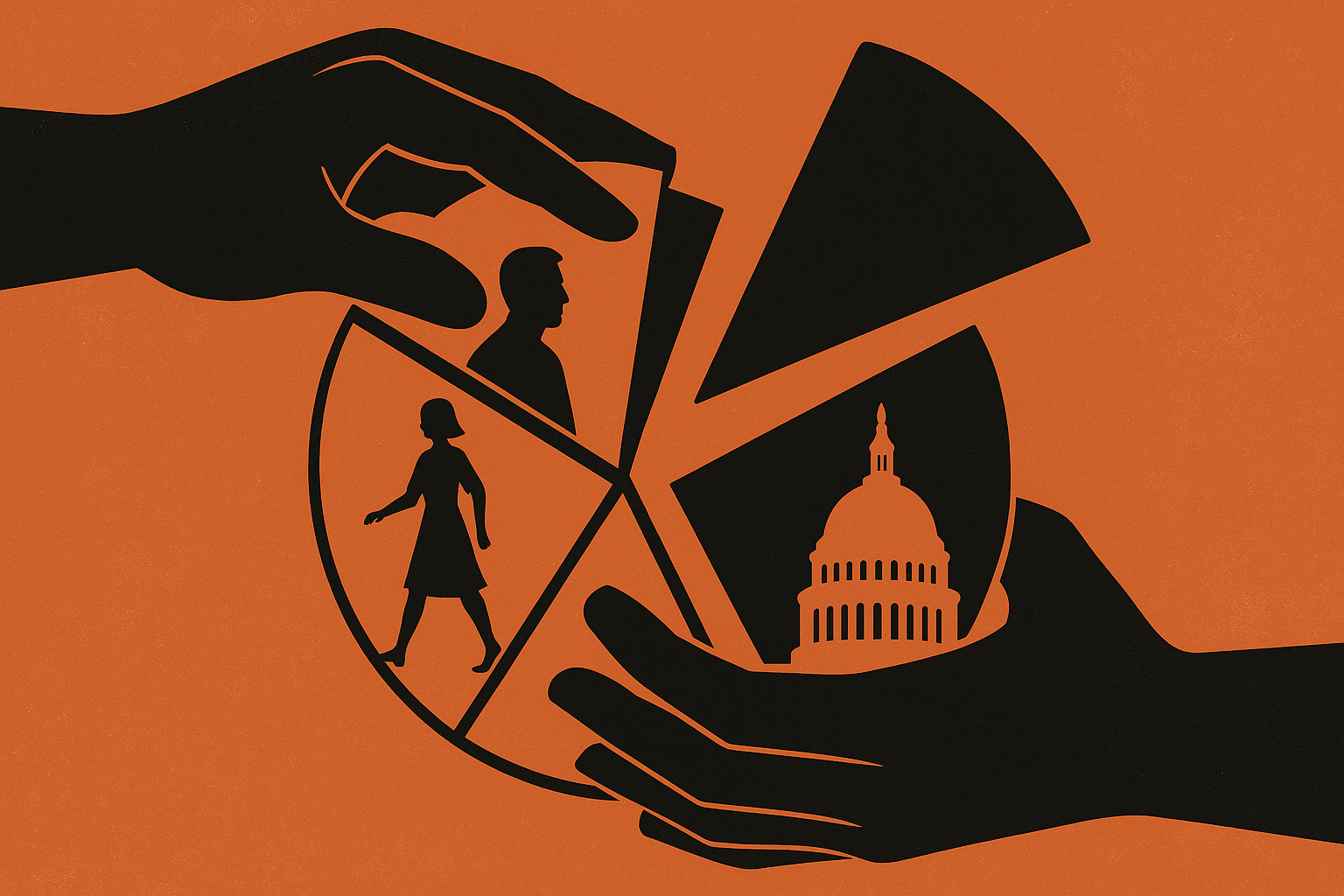
In late 2025, Mark Benioff — the billionaire founder of Salesforce and long-time civic benefactor of San Francisco — stunned locals by applauding the idea of deploying the National Guard to patrol the city’s streets.1 Within days, he apologized2 after a wave of criticism, calling it a “mistake.” Around the same time, The New York Times reported that Salesforce had been actively pursuing a multibillion-dollar contract with Immigration and Customs Enforcement3 to help the agency hire roughly 10,000 new officers and expand its data infrastructure. In a political climate where ICE agents, often masked and unmarked, have been accused of abducting civilians in public places, that contract wasn’t just a business deal — it was a moral Rorschach test
The internal documents include a five-page memo sent on Aug. 26 that explained how Salesforce is best suited to help the agency with “talent acquisition” to achieve its goal “to nearly triple its work force by hiring 10,000 new officers and agents expeditiously.”
New York Times
To many, Benioff’s actions looked like betrayal. Here was the patron saint of “stakeholder capitalism,” the man who once shut down Salesforce’s global offices for a “day of equality,” now aligning with militarized law enforcement. Yet looked at through the lens of profit logic, nothing about this behavior is irrational. When billions of dollars are suddenly appropriated for enforcement, companies that depend on government clients simply move toward the nutrient source. Profit-seeking, like biology, follows gradients of energy.

That’s the uncomfortable truth at the heart of this moment: we are no longer ruled by individuals so much as by the incentive system that rules them. In today’s economy, even the most powerful human beings seem capable of acting freely only when their choices align with profit maximization. Every other form of agency — moral, civic, communal — is punished by the system itself.
What’s left to decide, then, is whether we can build an alternative logic that doesn’t destroy those forms of agency, but strengthens them.
The Long March of Profit Logic
This story begins in the 1980s, when Jack Welch at General Electric codified the idea that a corporation exists not to make things, employ people, or serve society, but to maximize shareholder value. That idea, benign-sounding at the time, proved viral. It recast capitalism’s moral foundation: efficiency became virtue, growth became proof of intelligence, and profit became the metric of moral worth. “Greed is good” was never just a slogan — it was the metaphysics of an era.

As capital markets deepened, finance overtook production as the central nervous system of the economy. Firms stopped competing on physical goods and started competing on quarterly returns. The same logic soon migrated into other institutions. Universities, hospitals, and even nonprofits began adopting the managerial vocabulary of Wall Street: KPIs, ROI, lean operations, brand value. Profit logic became the default language of competence.
The public sector, meanwhile, was cornered into a defensive crouch. Reagan declared that government itself was the problem. Clinton, from the opposite party, agreed that “the era of big government is over.” Both sides accepted the premise that the private sector was the true engine of progress — faster, smarter, more innovative. The state could regulate and redistribute, but it shouldn’t try to compete. Bureaucracy was treated as pathology.
That ideological realignment hollowed out the moral basis of governance. Public agencies, judged against corporate benchmarks, inevitably looked slow and wasteful. Their very steadiness — the point of democratic bureaucracy — was reframed as incompetence. In time, government stopped aspiring to moral authority and began aspiring to efficiency. It outsourced everything from prison management to cloud computing, often to the same few firms that now rival nations in size. The result: instead of restraining capital, government increasingly served as its largest customer.
Salesforce, ICE, and the Profit Gradient
Enter Salesforce — a company that literally builds systems for managing relationships. In a world where data is the currency of control, Salesforce has quietly become the connective tissue of bureaucratic power: the interface through which both corporations and governments track people, contracts, and compliance.
When Congress appropriates tens of billions to expand immigration enforcement, that is not a policy signal alone — it’s a market signal. It tells the private sector where the next profitable frontier lies. For Salesforce to ignore that signal would mean sacrificing revenue to competitors. For its CEO to refuse on moral grounds would invite shareholder revolt, lost contracts, and a shrinking valuation.
Seen through that lens, Benioff’s ICE pursuit and his flirtation with militarized policing aren’t anomalies. They are expressions of a deeper algorithm: where money concentrates, capital converges. It’s easy to call this “corruption,” but that implies an ethical deviation. In truth, this is a system functioning exactly as designed.

When profit logic becomes total, even violence can be rationalized as a growth industry. What once would have been a moral contradiction — the “equality CEO” arming deportation squads — becomes a logical necessity. The outrage people feel is moral, but the underlying mechanics are perfectly logical. It’s the moral framework, not the market, that’s malfunctioning.
The Collapse of Human Choice
Profit logic has expanded from factories to finance, from corporations to governments, and now into the psyche of the individual. Every domain is expected to justify itself in economic terms. Teachers defend their salaries in terms of “impact per dollar.” Artists quantify “reach.” Politicians talk about the “business case” for human rights. Even activists are urged to “scale.”
The cumulative effect is a kind of moral suffocation.
Executives appear powerful but are trapped inside fiduciary cages. Politicians appear sovereign but answer to bond markets and campaign donors. Citizens appear free but can only express preference through consumption. The entire architecture of democracy is subordinated to a single value: return on investment.
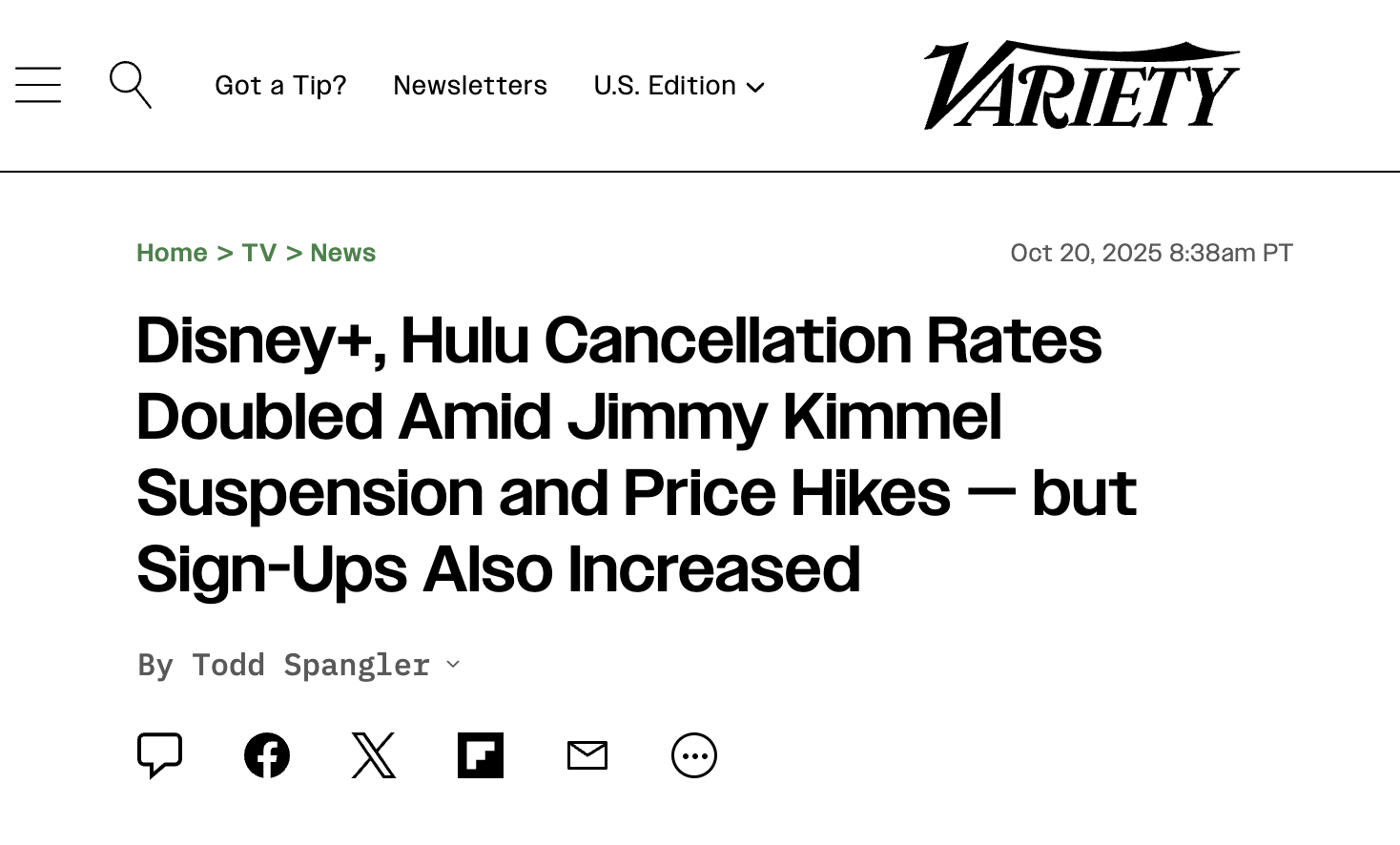
We like to imagine corruption as a personal failing, a story of greed and betrayal. But the deeper corruption is systemic — a world in which every rational actor is compelled to act against the collective good because the cost of defection is personal ruin. That is not greed; that is survival within a maladapted system.
Why Two Sectors Can’t Save Us
We keep treating this as a two-sided fight: the public sector versus the private sector. One promises equity; the other efficiency. One redistributes; the other creates. But as long as those are the only two players, we’re stuck in a zero-sum oscillation — regulation and backlash, stimulus and austerity, privatization and populist revolt.
This binary structure can’t stabilize. A system with only two poles is inherently unstable. When one dominates, the other must either overcorrect or collapse. That’s why politics feels like whiplash — every election swinging between incompatible ideologies that each half-define themselves by hating the other.
In reality, both are right about the other’s flaws. The public sector can ossify, losing responsiveness and innovation. The private sector can metastasize, consuming everything in pursuit of growth. The problem isn’t that one is good and the other bad. It’s that we’ve built a civilization on a line that needs a plane.
The Case for a Third Pillar: The Purpose Sector
To restore balance, we need a third pillar — a fully realized Purpose Sector — that takes the best attributes of both while avoiding their pathologies. This isn’t an abstract moral wish; it’s an empirical observation of where innovation already comes from.
Look around:
Every foundational technology of the digital age — the internet, GPS, touchscreens, vaccines, AI research — began in nonprofit or public-academic labs.
The open-source software that powers global commerce was written largely by volunteer or mission-driven communities.
Credit unions, co-ops, and community foundations quietly manage trillions in assets without generating billionaires.
In other words, the nonprofit world is already one of the most innovative sectors in existence. It just doesn’t get credit because its success isn’t denominated in stock price.
What’s missing isn’t ingenuity; it’s scale, capital, and visibility. If we built the Purpose Sector to rival the corporate one — with comparable access to funding, technology, and talent — we could re-anchor the economy around human ends without sacrificing dynamism.
Why Three Is the Stable Number
There’s a reason three is the magic number in systems design. Two points make a line; three make a plane. A two-pole world wobbles. Add a third leg and it stands.
You see it everywhere:
The three branches of government check one another.
The triple-helix model of innovation — government, industry, academia — produces breakthroughs faster than any duo.
Even physics prefers triads: electrons, protons, neutrons; red, green, blue.
A three-pillar economy could work the same way:
Profit Sector — generates raw wealth through risk and efficiency.
Public Sector — regulates, redistributes, and guarantees rights.
Purpose Sector — deploys wealth, talent, and tech toward profit-scarce but socially vital domains.
The third pillar doesn’t replace the others; it triangulates them. It introduces a stabilizing force — a domain where human ends, not market ends, define value, but where market-like competition drives quality and innovation.
Designing the Purpose Sector
The task isn’t to moralize capitalism; it’s to institutionalize purpose at competitive scale. A few design principles could make this real:
1. Capital for Outcomes, Not Exits
Instead of venture capital chasing 100x returns, create evergreen funds and recoverable grants that recycle modest returns into the commons. Social wealth funds — seeded by carbon fees, tech taxes, or resource rents — can feed perpetual financing for mission-driven enterprises.
2. Procurement that Competes on Human Value
Governments can redirect a fixed share of public contracts to mission-locked organizations competing on outcomes like trust, safety, or well-being — not just cost. Open standards ensure that code, data, and research remain public goods.
3. Mission-Locked Governance
Purpose trusts, cooperative ownership, and multi-stakeholder boards can prevent privatization creep. Workers and communities hold representation, and transparency is mandatory.
4. Career and Cultural Mobility
Bridge the wage and prestige gap so professionals can move fluidly between sectors. Portable benefits, fellowships, and civic tech labs can make “working for purpose” a career path, not a sacrifice.
The point isn’t to create charity. It’s to create production with purpose — enterprises that generate value but measure success in human outcomes, not investor multiples.
Restoring Human Agency
Rebuilding agency means giving people — not just leaders, but workers and citizens — genuine options to align their actions with their values without being economically destroyed for it.
In a two-pillar world, that choice barely exists. A CEO who rejects a lucrative but immoral contract risks replacement. A government worker who challenges policy risks their career. A citizen who refuses the consumption treadmill risks invisibility. The system punishes deviation from profit-seeking behavior.
A robust Purpose Sector would expand the feasible space of moral action:
Leaders could prioritize ethics without destroying shareholder value.
Workers could pursue meaningful jobs with dignity and fair pay.
Communities could control local resources without waiting for corporate charity or federal rescue.
Human agency flourishes not in abstraction, but in institutional design. We don’t need better people; we need better architectures that let good people act freely.
Reclaiming the Moral Imagination
What makes the Salesforce–ICE story so unsettling isn’t just the violence it enables. It’s what it reveals about our collective imagination: that we can no longer picture power being used for anything but accumulation. When even the so-called “good billionaires” find themselves funneled toward the same contracts, we’ve reached the logical endpoint of shareholder civilization.
Profit logic has eaten our sense of possibility. It has taught us to equate scale with virtue and moral hesitation with weakness. But civilization’s progress has always depended on institutions that resist the prevailing logic—monasteries preserving knowledge after Rome’s fall, universities nurturing inquiry before industry could monetize it, charities building hospitals before healthcare became an “industry.”
It’s time to build institutions like that again — not as relics, but as a new sector of production designed for the 21st century. A sector that can match the private economy in innovation and the public one in legitimacy. A tripod for a teetering world.
Because the question isn’t whether we can make capitalism kinder or government smarter. The question is: can we give human beings room to act freely again?
If we can, the next time a powerful person faces a moral choice, they won’t have to choose between virtue and survival. They’ll have a third option — a system that makes doing good the rational move.
That, more than any slogan or reform, would be the true restoration of human agency.