When Amazon recently announced plans to cut 30,000 corporate jobs1 and pursue the automation of up to 75 percent of its workforce2 in the next few years, the headlines framed it as primarily a story about employment, or proof that artificial intelligence is getting smarter.
But intelligence isn’t the whole story. And it’s getting more than it’s share of coverage.
What’s really changing is how near these systems are coming to us, to our physical bodies—how completely they are stepping out of our screens and into the physical world.
AI isn’t getting smarter. It’s getting closer.
The Unseen Half of the Revolution
Every week brings some new model that can write, draw, create hyper-realistic video, or code. These feats feel intimate because they happen inside our media—text, image, sound, language. They reach us through our most addictive content channels.
(Check out this great piece by my colleague, Polly Cannella, on the subject of social media)
Meanwhile, an equally profound transformation is unfolding in the background:
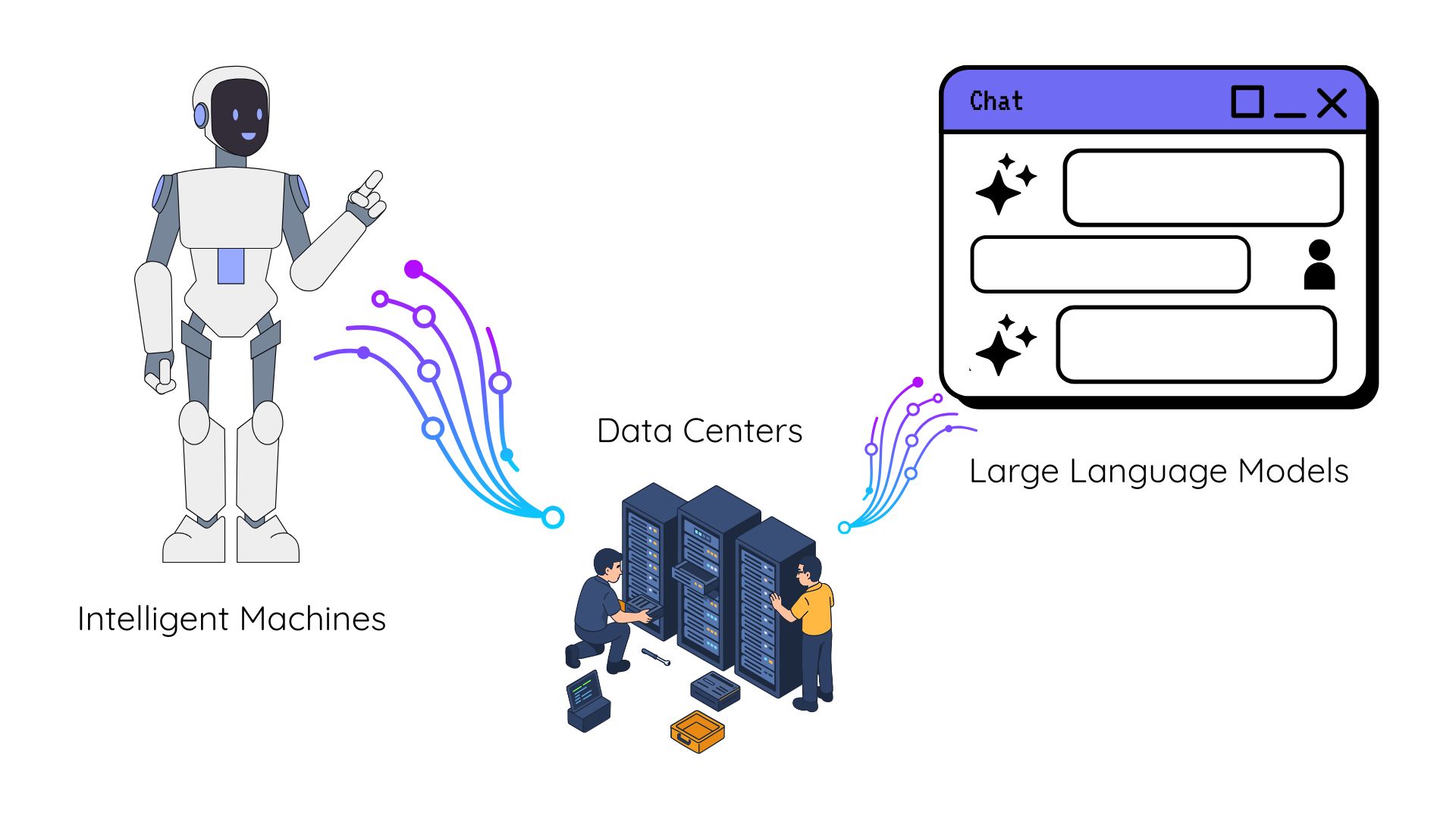
the rise of embodied AI—robots, drones, autonomous vehicles, and the computer-vision systems that let machines navigate real space.
Both movements share the same anatomy: gigantic data centers, oceans of training data, and ever-larger clusters of compute.
We call one software and the other hardware, but they’re the same brain spreading into new bodies.
The Robot Exhibitions
If I scroll long enough on my Reddit feed, I’ll find clips from robotics expos across East Asia—particularly China—that look like trade shows from another timeline. In these open showcases, the public is encouraged to check out the latest innovations in robotics from some of the most dynamic technology firms in the world.
Names that are unfamiliar to many Americans—Xpeng, BYD, and DJI.
Check out this video of a small humanoid robot being kicked, martial arts style, to demonstrate its astonishingly resilient balancing system.
It’s impressive and unsettling at once.
Something inside me struggles to admire the spectacle of humans striking the near-human figures, despite the impressive feat of engineering on display, and the lack of an animate victim.
I worry this is how we will end up teaching these new digital entities to understand power: through the theater of our cruelty.
For twenty years, Boston Dynamics, a leading American robotics company, has periodically released footage of its prototypes. Over the years, they have gone from hulking prototypes tethered to power cords to today’s models, which are compact, wireless, graceful.
We don’t seem to be paying any attention to the remarkable progress being made in the field of advanced robotics.
The Battlefield of Miniatures
The same transformation is playing out in the most brutal laboratory on Earth. In Ukraine, necessity has accelerated drone innovation at breakneck speed.
What began as improvised consumer hacks has become one of the world’s most advanced autonomous-weapons ecosystems.
Swarms of small, cheap machines now disable tanks and artillery once built to withstand giants. Units that cost mere thousands of dollars to design and a few hundreds of dollars to build, are capable of destroying multi-million dollar war machines created by multi-billion dollar national defense programs.

The pattern is familiar.
The future of conflict seems to be shifting away from vast carriers or costly jets, toward countless, replaceable devices that fly low and think fast.
Power is condensing, shrinking.
Nature already taught us this lesson: the deadliest creature in human history is not a thousand-pound predator but the mosquito. Some estimates hold mosquitoes responsible for killing roughly half of all humans who have ever lived via the many lethal diseases they carry.
Smallness scales.
The unassuming often wins.
The Cognitive Gap
Why does this revolution feel invisible? Because our gaze is captured by the screen.
Generative AI feels intimate—it talks to us, imitates us, flatters us.
The physical side of AI operates out of sight: warehouses, skies, factories, basements.
We notice what appears on our phones, and we are missing so much of the movement happening just beyond the frame.
AI’s mind is public; its body is growing in private.
Amazon’s new warehouses are a prime example of the rise of robots touching our lives in important yet barely perceptible ways.
Amazon opened its most advanced warehouse, a facility in Shreveport, La., last year as a template for future robotic fulfillment centers. Once an item there is in a package, a human barely touches it again. The company uses a thousand robots in Shreveport, allowing it to employ a quarter fewer workers last year than it would have without automation, documents show. Next year, as more robots are introduced, it expects to employ about half as many workers there as it would without automation.
The First Machines That Can Touch Us
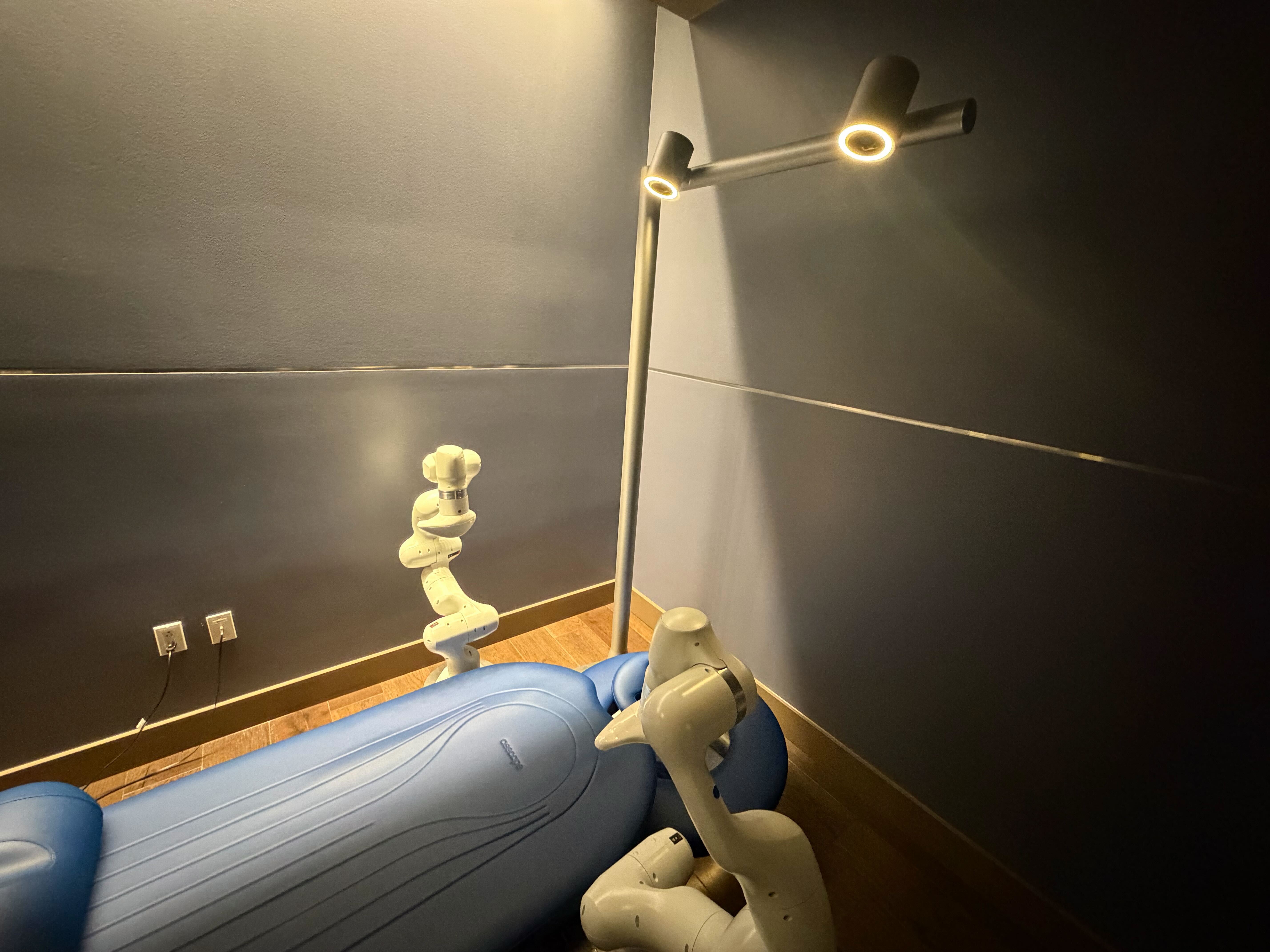
I predict we are mere months away from the moment when robotic touch will break into our collective consciousness.
Just this week, my colleague shared the following image of an automated massage station. He received an “amazing” massage from a robot and paid just $10 for the hour-long session.
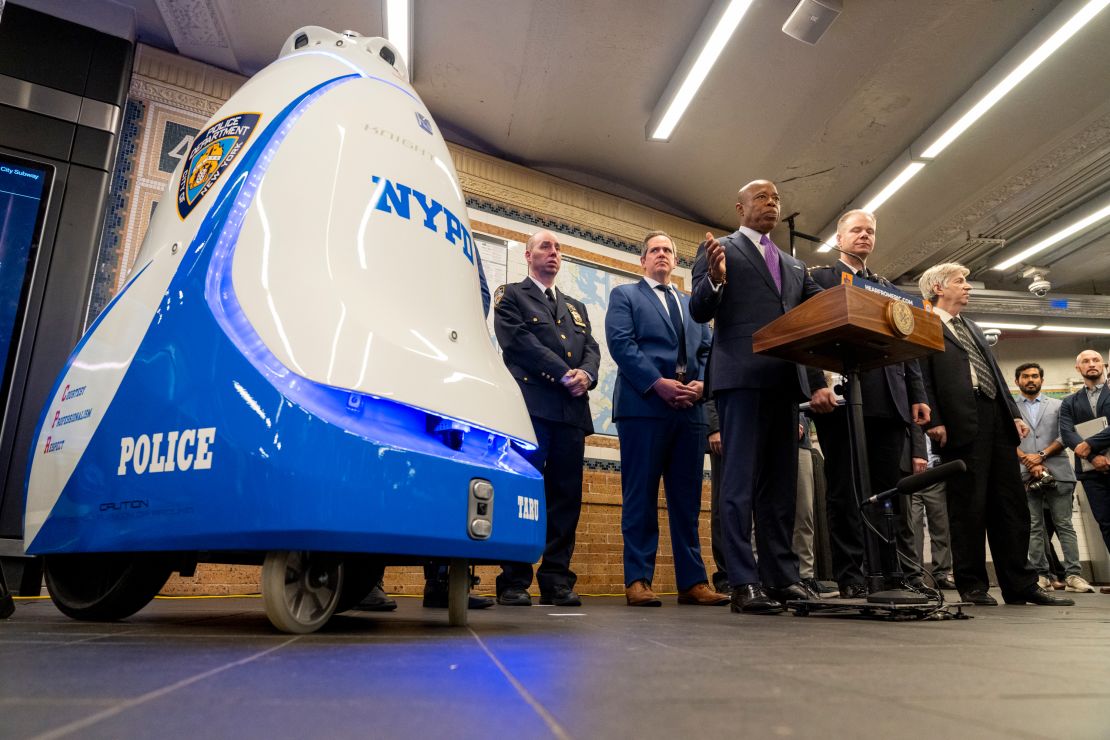
Some of the first jobs at risk are security guards—people paid to watch, patrol, and occasionally intervene.
They’re everywhere yet invisible, often half-asleep in their boxes.
Now imagine the cheaper, tireless version: an armored cylinder on wheels, or a humanoid sentinel with 360-degree cameras, infrared sensors, and the strength to block a doorway.
It never calls in sick.
It doesn’t unionize.
It streams live video to the cloud.
At first it merely observes; later it follows; finally it enforces.
The moment a machine can push back—can physically impose its will—the age of tools quietly ends.
Not all of them will patrol. Some machines will touch us to police us; others to please us. The distance between threat and comfort is collapsing.
What matters is that both require proximity—bodies close enough to feel one another.
The Shrinking Distance
Across Amazon’s warehouses, China’s robot expos, Ukraine’s skies, and our own city streets, a single pattern repeats: digital intelligence is getting closer to our physical bodies.
We keep measuring progress by the size of the models, the number of parameters, the magnitude of the data. But the real metric of change is how little space now separates us from the systems we’ve built.
AI isn’t getting smarter—it’s getting closer.
From now on, I expect every leap in intelligence will be felt before it’s understood. It won’t announce itself with conversation or creativity. It will simply be there—near enough to touch, or to touch us.
The distance is closing.
And if there’s one thing I want to leave you with, it’s this: we’re not paying enough attention.
For months, the punditry around AI has centered on the loss of information work—the writers, designers, coders, and analysts whose tools are made of text and pixels.
But Amazon’s warehouses tell a different story. When the country’s second-largest employer can replace half its human workforce through automation, it shatters the idea that physical jobs are somehow protected. There is no automatic job security in labor that happens off-screen. The real world is exactly where AI is moving next.
The same corporations that perfected digital automation are now mastering mechanical automation. They are uniting astonishing cognitive power with rising physical prowess—and they’re doing it faster, cheaper, and at a scale only the largest employers can achieve.
So if there’s a takeaway here, let it be this: pay attention to the rise of robotics. Watch how intelligence is gaining motion, how code is becoming muscle. Because when those forces finally converge, the story of automation won’t just unfold on our screens.
It will unfold beside us.